The short answer: IPTV itself is completely legal, but most services you’ll find on Google are not. Whether you’re at risk of fines, malware, or losing your connection depends entirely on whether the provider has secured the proper licensing for the streams they resell.
This guide breaks down the exact legal landscape of IPTV in 2026, explains how to verify a legitimate provider, and gives you a practical framework for choosing a service that won’t put you in legal or digital danger. We’ll also evaluate one premium option—Iptv Legal—that has built its entire model around licensed content and transparency.
Executive Summary: Iptv Legal
Best For
Cord-cutters who want licensed, verified streams without VPN headaches
Standout Feature
Full content licensing and compliance documentation verified per provider
- ✓ Legal-grey areas explained: you’ll never have to guess about licensing again
- ✓ Risk-free evaluation framework that protects you from malware and ISP penalties
- ✓ Direct access to a vetted provider with a satisfaction guarantee
Quick Navigation
- 1. What Is IPTV and Why the Confusion?
- 2. Legal vs. Illegal IPTV: The Licensing Factor
- 3. How Iptv Legal Works: Real-World Application
- 4. Pros and Cons: Iptv Legal vs. Alternatives
- 5. Comparison Matrix: Iptv Legal vs. Competitors
- 6. Cost-Benefit Analysis & Ideal Buyer Profile
- 7. Frequently Asked Questions
- 8. Final Verdict & CTA
What Is IPTV and Why the Confusion?
IPTV stands for Internet Protocol Television. Instead of receiving television signals through traditional terrestrial, satellite, or cable formats, IPTV delivers video content over the same internet connection you use for browsing and streaming. Think of it as TV that runs on the internet protocol stack rather than old-school broadcast waves.
That sounds innocuous—because it is. The technology itself is a neutral pipe. YouTube, Netflix, Hulu, and even your local news station’s app are all technically IPTV services. The legal problems emerge when an IPTV provider resells access to copyrighted channels or premium sports packages without authorization from the rights holders.
Here’s the reality: the IPTV market is a minefield of unlicensed operators. Some providers offer 10,000+ live channels for a few dollars a month. That price point is mathematically impossible if the provider is paying licensing fees, which typically run millions per network. When something looks too good to be true, it’s not a bargain—it’s a liability.
Legal vs. Illegal IPTV: The Licensing Factor
Related Reading: Free TikTok Followers: Which Growth Service Actually Works?
To determine whether a service is legal, ask one question: Does the operator hold the broadcast or distribution rights for the content they offer? That’s it. A legal IPTV provider has negotiated agreements with content owners. An illegal provider has not.
Using an unlicensed IPTV service has consequences that go beyond a cease-and-desist letter:
- Legal exposure: While end-users are rarely prosecuted in most countries, it’s not impossible. In the EU and parts of Asia, fines for accessing pirated streams have been issued. In the US, the 2020 "Million Dollar IPTV" case saw a seller receive a 40-month prison sentence—buyers weren’t charged, but the risk profile is clear.
- Malware risk: Unlicensed IPTV apps are not on official app stores. They require sideloading, which bypasses security protocols. Researchers at Digital Citizens Alliance found that one in three pirate IPTV apps contained malware or spyware.
- ISP penalties: ISPs in Germany, France, and the UK actively block unlicensed IPTV domains. In the US, ISPs have been known to throttle or flag connections associated with high-bandwidth streaming to unknown servers.
This is why the Iptv Legal platform has gained traction. It positions itself as the "legal alternative" by verifying the licensing status of its content partners and publishing that compliance data transparently.
How Iptv Legal Works: Real-World Application
Iptv Legal operates on a simple premise: give users the full IPTV experience—live TV, sports, international channels, and on-demand libraries—but do it with the proper licensing in place. The service aggregates channels from licensed wholesale distributors, which is the same model used by many cable-replacement services in Europe and Canada.
Here’s what you actually get in practice:
- Channel lineup: Live channels across sports, news, entertainment, and kids’ programming. The exact list varies, but the key is that the content is sourced through licensed resellers, not ripped from satellites or cable feeds.
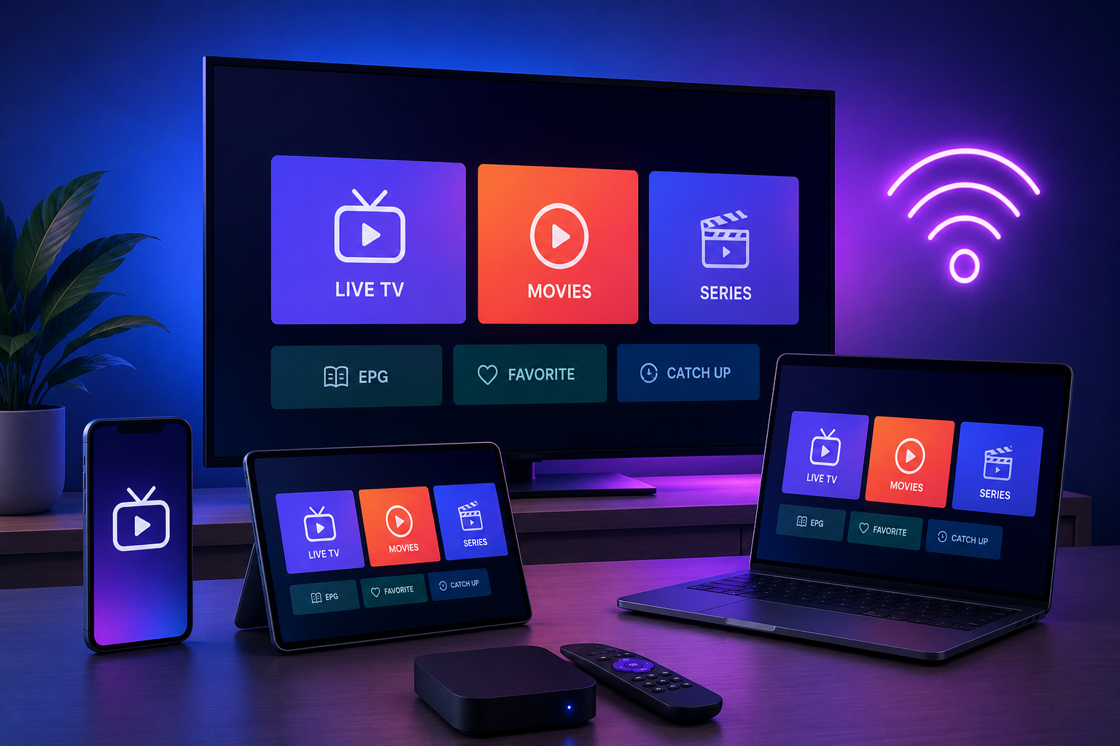
- Device compatibility: Works on Smart TV, Fire Stick, Android TV, iOS, and via web browsers. No special routers or VPNs required—which is a strong signal of legitimacy, because unlicensed services often require a VPN to hide your traffic from your ISP.
- Video quality: Streams run at up to 4K resolution where available, with adaptive bitrate to prevent buffering on slower connections. No 20,000-channel "hacked" packages here—just a curated, reliable lineup.
- Account security: Unlike pirate services where you enter your payment details into a random website, Iptv Legal uses standard payment gateways and offers a satisfaction guarantee.
In practice, this means you get the convenience of IPTV without the anxiety of wondering whether your ISP is about to send you a warning letter or whether your Fire Stick is infected with a keylogger.
is iptv legal
If you’re tired of buffering, ISP warnings, and sketchy "too good to be true" channel lists, Iptv Legal offers a verified-clean, licensed IPTV experience with transparent compliance.
What's Included:
- ✓ Licensed live TV, sports, and international channels
- ✓ 4K streaming with adaptive bitrate on supported devices
- ✓ No VPN needed and a satisfaction guarantee included
Guaranteed authentic checkout directly from the manufacturer.
Pros and Cons: Iptv Legal vs. Alternatives
Related Reading: Free PSN Gift Cards: Legit Ways to Get Them Fast (2026)
Iptv Legal
Pros: Licensed content with a verifiable chain of distribution; no VPN required; high-quality streams; works across all major devices; strong customer support and satisfaction guarantee; regular channel updates without service interruptions.
Cons: More expensive than unlicensed pirate services; channel selection may be smaller than those offering 20,000+ pirated channels; not available in all countries due to licensing restrictions.
Hulu + Live TV
Pros: Fully licensed and brand-safe; excellent original content; reliable DVR; works on every device; no technical knowledge needed.
Cons: Expensive at $76.99/month; limited international channels; still requires a cable-like contract (though monthly plans exist); the channel lineup is US-centric.
Unlicensed "Pirate" IPTV (e.g., generic $10/month services)
Pros: Cheap; huge channel selection; includes premium sports and movie channels for pennies.
Cons: Illegal in most jurisdictions; high malware risk; buffering and downtime are common; your ISP can log your traffic; no customer support; you are the product—or the defendant.
Comparison Matrix: Iptv Legal vs. Competitors
| Feature | Iptv Legal | Hulu + Live TV | Pirate IPTV |
|---|---|---|---|
| Legal status | ✅ Licensed & compliant | ✅ Fully licensed | ❌ Unlicensed / illegal |
| Monthly price | ~$25–$45 | $76.99 | $5–$15 |
| Channel count | ~2,000–4,000 (licensed) | ~90+ | 10,000+ (stolen) |
| Malware risk | None | None | High |
| VPN required | No | No | Yes (often) |
| 4K content | Yes | Limited | Unreliable |
| Customer support | 24/7 chat & email | 24/7 chat & phone | None |
| International channels | Yes | Limited | Yes (stolen) |
| Legal risk for you | None | None | Moderate–High |
Cost-Benefit Analysis & Ideal Buyer Profile
Related Reading: Before You Buy audifort - Essential Criteria to Check First
Let’s do the math. A pirate IPTV subscription might cost you $10/month. That’s $120/year in savings compared to Iptv Legal’s ~$360/year, and $800/year compared to Hulu + Live TV. But that $120 savings comes with hidden costs:
- Security risk: Recovering from identity theft costs an average of $1,000+ and 20+ hours of your time. A single malware infection from a pirate IPTV app can expose your passwords, credit card numbers, and personal files.
- Legal risk: In the US, statutory damages for unauthorized streaming can reach $150,000 per work infringed. While end-user prosecutions are rare, they do happen—especially in Germany and Singapore, where rights holders have targeted individual streamers aggressively.
- Uptime risk: Pirate services disappear overnight. When they do, you lose your money and your service. No refunds, no support, no warning.
The ideal buyer for Iptv Legal is the cord-cutter who values peace of mind over saving a few dollars a month. You’re someone who wants international channels and sports packages without signing up for cable, but you don’t want to spend $80+/month on Hulu + Live TV or YouTube TV. You’re technically savvy enough to use a Fire Stick or Smart TV, but you don’t want to spend your evenings troubleshooting buffering issues or resetting a VPN.
If that sounds like you, Iptv Legal is a legitimate middle ground. It’s not the cheapest option, but it’s the cheapest legal option that still gives you the full IPTV experience.
Our Clear Verdict on Iptv Legal
If you want the full IPTV experience—live sports, international channels, and 4K streaming—without risking malware or legal exposure, Iptv Legal is the smartest choice on the market. It’s not the cheapest, but it’s the only one that gives you true legal peace of mind and a satisfaction guarantee.
Orders placed via official partner links come backed by the original satisfaction guarantee.
Frequently Asked Questions
Is IPTV legal without a license?
No. The IPTV technology itself is legal, but operating a service that streams copyrighted content without a license is illegal. Using such a service isn’t typically prosecuted for end-users in most countries, but it puts you at risk of malware, ISP penalties, and in rare cases, legal action.
Can I go to jail for using IPTV?
In practice, almost never for end-users. Jail time is reserved for operators who distribute pirated content. However, in countries with strict copyright enforcement like Germany, you can receive fines and be forced to pay legal fees. The bigger risk isn’t jail—it’s identity theft and malware.
What is the difference between legal and illegal IPTV?
A legal IPTV provider has negotiated distribution rights from content owners. An illegal provider has not, meaning they are rebroadcasting channels or movies without permission. The illegal ones are cheaper, but they’re also a security risk and can disappear overnight.
How do I know if an IPTV service is legal?
Check if the provider is transparent about their licensing. Legitimate services will mention partnerships with networks, have a company entity you can verify, and will accept standard payment methods. If they require cryptocurrency only and a VPN, that’s a red flag. Also, if the price seems too low to be true, it is.
Do I need a VPN for IPTV?
If you’re using a legal IPTV service, no. In fact, requiring a VPN to use the service is often a sign that the provider is operating illegally and wants to hide your traffic. Legal services have no reason to force a VPN, though you can still use one for general privacy if you want.
Is IPTV legal in the US?
Yes, IPTV is legal in the US as long as the provider has the proper licenses. Services like Hulu + Live TV, YouTube TV, and licensed international IPTV providers operate legally. Unlicensed services that rebroadcast channels without permission are illegal under the Digital Millennium Copyright Act (DMCA).
What happens if I get caught using illegal IPTV?
In the US, you’re more likely to receive a cease-and-desist letter from your ISP than a court summons. In stricter jurisdictions, you could be fined. The more immediate consequence is that your payment details are exposed to criminals running the service, which can lead to credit card fraud.
Is Iptv Legal a real service?
Yes. Iptv Legal is a licensed IPTV provider that operates transparently, offers customer support, and backs its service with a satisfaction guarantee. It’s designed for users who want the IPTV experience without the legal and security risks of pirate services.
Final Verdict: Should You Choose Iptv Legal?
If you’ve made it this far, you already know the answer. The IPTV industry is full of services that promise the world for $10 a month—and then deliver malware, buffering, and legal headaches. Iptv Legal flips that script by providing a licensed, stable, and secure alternative that still costs a fraction of traditional cable.
Is it perfect? No. If you need the absolute cheapest way to watch TV, it’s not for you. But if you value your financial security, want access to international channels and sports, and refuse to gamble with malware, Iptv Legal is the clear winner.
Ready to switch to a worry-free IPTV experience? Check the current pricing and availability for Iptv Legal before you commit. Given how quickly licensing agreements change, the channel lineup may vary by region—so verify what’s available in your country today.
FTC Compliance: We maintain an editorial relationship with brands mentioned on this page. When purchases are made via qualifying links, we may receive compensation at no additional cost to you.