This article contains affiliate links. If you buy through them, we may earn a commission at no extra cost to you. Learn more.
Field Notes
An IPTV provider streams live television and on-demand content over the internet, not through cable or satellite. This guide explains how the technology works, what to look for when choosing a service, and who it actually suits best.
In Brief
- An IPTV provider delivers live TV and on-demand content over a broadband internet connection, not via cable or satellite.
- Channel selection, streaming reliability, and video quality vary significantly between providers — research is essential.
- A stable internet connection (25 Mbps minimum for HD) is the single most important factor for a buffering-free experience.
- Not all services operate legally; stick with licensed providers or verified resellers to avoid service interruptions and security risks.
In this guide
If you have asked yourself what an iptv provider actually is, you are not alone. The term gets thrown around in forums, YouTube reviews, and tech blogs, but the explanations are often thin.
At its simplest, an IPTV provider is a company that delivers television programming over the internet using the Internet Protocol (IP) network — the same technology that powers your web browsing and email. Instead of receiving a signal through a coaxial cable or a satellite dish, you get it through your broadband connection. This shift matters because it unlocks a level of flexibility that traditional TV services struggle to match: watch on any screen, pause live broadcasts, and access thousands of channels for a fraction of the usual monthly fee.
But not every IPTV service is built the same. Some operate with proper licensing and stable infrastructure; others disappear overnight. This guide walks through the technical basics, the honest trade-offs, and the concrete criteria you should use when comparing providers. Whether you are looking for the best ip-tv provider 2026 or simply want to understand how to choose an ip-tv provider, the information here aims to give you a solid foundation.
What Exactly Is an IPTV Provider?
IPTV stands for Internet Protocol Television. Think of it as the difference between listening to the radio over the airwaves versus streaming a podcast on your phone. Both deliver audio content, but the method is completely different. An ip-tv provider uses your home internet connection to send video packets to a set-top box, a smart TV app, or a media player like an Amazon Fire Stick.
There are three main types of IPTV services:
- Live television — mainstream channels broadcast in real time, exactly like a cable feed but delivered over IP.
- Video on demand (VOD) — a library of movies and series you can watch whenever you want, similar to Netflix or Amazon Prime.
- Time-shifted TV — catch-up services that let you watch a programme that aired hours or days earlier, often stored on the provider's server.
Many providers bundle all three. A typical subscription might include 8,000 to 15,000 live channels (depending on the package), a VOD library of several thousand films, and an electronic programme guide (EPG) that shows you what is on now and next.
How IPTV Works — Step by Step
Related Reading: How to Get Free V Bucks - Step by Step for Beginners
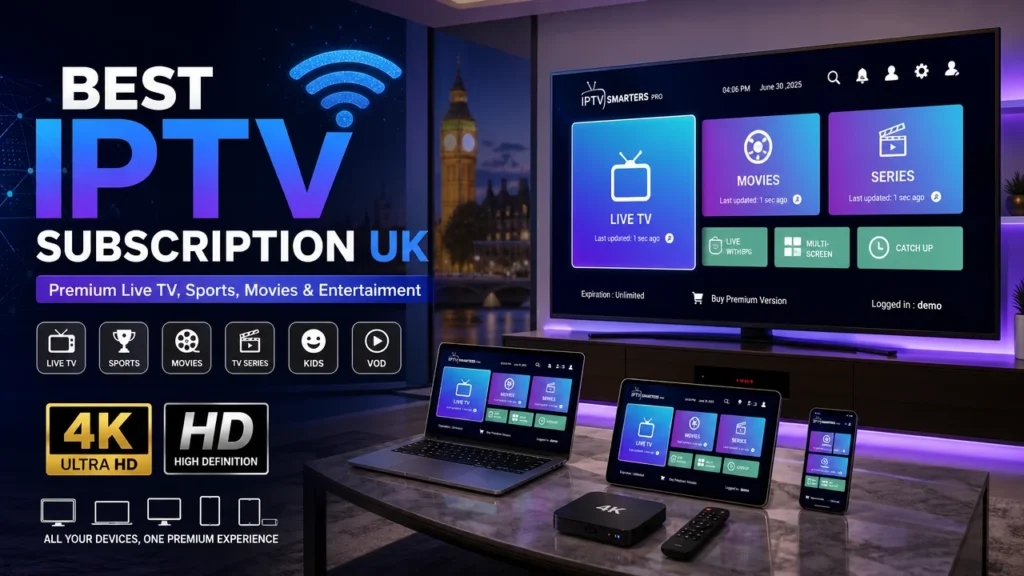
The technology is simpler than many people assume. Here is the process from the moment you press "play" on a channel:
- You select a channel or video through the app or interface on your device — a smart TV, phone, tablet, or streaming box.
- The app sends a request to the provider's server, asking for a specific stream or file.
- The server encodes the video into small data packets using a compression standard such as H.264 or H.265 (HEVC). Modern providers use adaptive bitrate streaming, which adjusts the video quality in real time based on your connection speed.
- The packets travel over the internet to your home router, then via Wi-Fi or Ethernet to your device.
- Your device decodes the packets and reassembles them into smooth video and audio. A buffer (a temporary storage area) holds a few seconds of data to compensate for any fluctuations in network speed.
The entire process takes less than two seconds for a well-configured provider. The catch, as you might expect, is that everything depends on the quality of the server infrastructure and the speed of your internet connection.
Concrete Benefits with Real-World Scenarios
Switching to an IPTV provider brings several practical advantages. The most immediate is the sheer breadth of content. Where a standard cable package might offer 200 channels, many IPTV subscriptions include 10,000 or more, covering virtually every country and language group. For someone who wants to watch English Premier League football, Turkish drama, and American news all in one evening, that range is hard to beat.
Then there is the device flexibility. A single subscription often works on multiple screens simultaneously — typically two to five connections depending on the plan. One household might stream a live match on the living room TV while a second person watches a movie on a tablet in the bedroom and a third catches a documentary on a laptop at the kitchen table. Cable TV cannot do that without expensive extra boxes.
Cost is another factor. The cheapest ip-tv subscription plans start around £8 to £15 per month, compared to the £40 to £70 typical for a mid-range cable package in the UK or US. The value proposition is obvious on paper, though as we discuss in the limitations section, the low price can come with caveats.
For sports fans specifically, many providers offer dedicated sport bundles with every league and combat sport under one roof. Someone searching for an ip-tv provider for sports can often find a plan that includes multiple 4K feeds of matches that would otherwise require separate paid subscriptions to services like Sky Sports, DAZN, or ESPN+.
A single IPTV subscription can replace three or four separate streaming services — but only if the provider is stable enough to deliver consistent, high-quality streams.
Honest Limitations
Related Reading: Why tvpass Keeps Buffering & How to Fix It for Good
For all its advantages, IPTV has real drawbacks that are often glossed over in promotional content. The most significant is reliability. Because live IPTV is delivered over a shared internet connection, buffering and pixelation can occur during peak hours, especially if your broadband speed dips below 25 Mbps or if the provider's servers are under heavy load. A reliable ip-tv provider no buffering does exist, but it is rarer than marketing suggests.
The legal landscape is another complexity. While IPTV technology itself is perfectly lawful (many telecom companies use it for their own services), a large number of third-party providers sell access to channels without proper licensing. Using an unlicensed service can expose you to several risks:
- Service shutdown without warning — providers can disappear overnight.
- No customer support or refunds if the service goes down.
- Potential legal liability, though this varies by country; in the UK and US, the legal risk for end users is generally low, but it is not zero.
- Security concerns — some unverified portals have been linked to malware and data harvesting.
Additionally, the user experience can feel fragmented. Unlike a polished cable or satellite interface, many IPTV apps have clunky electronic programme guides, inconsistent metadata, and channels that appear in the wrong category. It works, but it does not always feel premium.
Finally, there is the question of geo-blocking and VPN compatibility. Some IPTV services block traffic from certain countries, or conversely, your internet service provider (ISP) may throttle IPTV traffic. Many users find that they need a VPN to get consistent performance.
IPTV vs. Cable TV vs. Streaming Services
To make an informed decision, it helps to see how IPTV stacks up against the alternatives. The table below compares the three options across key criteria:
| Feature | IPTV Provider | Cable / Satellite TV | Streaming Services (Netflix, Prime, etc.) |
|---|---|---|---|
| Monthly cost | £8 – £20 | £40 – £80 | £6 – £15 each (per service) |
| Live TV channels | 5,000 – 15,000+ | 100 – 300 | Limited (e.g., YouTube TV, Hulu Live) |
| On-demand library | Large (5,000+ titles) | Small (limited catch-up) | Very large (exclusive content) |
| Simultaneous screens | 2 – 5 | 1 – 2 (with extra box fees) | 1 – 4 (depending on plan) |
| Video quality | SD to 4K (varies by provider) | HD, some 4K | HD to 4K HDR |
| Reliability | Medium – high (depends on provider) | High | High |
| Legal certainty | Low – medium (check licensing) | High | High |
If your priority is where to buy iptv legally, look for providers that partner with known broadcasters or are resellers of licensed content. Some legitimate services operate in a grey area by offering "IPTV subscriptions" that aggregate free-to-air international channels, while others hold proper distribution rights for everything in their catalogue.
Who It Is For — User Profiles
Related Reading: How to Get Started with an IP-TV Provider: A Step-by-Step Guide
Not everyone benefits equally from switching to an IPTV provider. Based on the experiences shared in ip-tv provider reviews reddit and user forums, three profiles tend to get the most value:
- The cord-cutter on a budget. If you are paying £60+ per month for cable and only watch a handful of channels, IPTV can cut your bill by 70% while giving you access to more content. The trade-off is that you need to be comfortable with a less polished interface and occasional hiccups.
- The global content enthusiast. Expats, diaspora communities, and multilingual households often find that IPTV is the only practical way to get channels from their home country alongside local programming. A typical service includes feeds from India, Pakistan, Turkey, the Philippines, Nigeria, and dozens of other countries.
- The sports superfan. Someone who wants access to multiple leagues, pay-per-view events, and international sports channels without paying for separate subscriptions will find IPTV appealing. Many providers dedicate entire server clusters to major sporting events to reduce lag.
IPTV is generally not for people who want a "set and forget" experience, or for those with slow or unreliable internet connections. If you find menu navigation frustrating, or if your broadband speed is below 20 Mbps, sticking with cable or a mainstream streaming service will likely cause less frustration.
How to Get Started — 5 Numbered Steps
If you have decided to try an IPTV provider, here is a practical, step-by-step process that reduces the chance of picking a dud:
- Check your internet speed. Run a speed test at fast.com or speedtest.net. You need a minimum of 25 Mbps for stable HD streaming, and 50 Mbps if multiple household members will watch simultaneously. If your connection is slower, IPTV will frustrate you.
- Identify the device you will use. Most IPTV services work on Android TV / Google TV, Amazon Fire Stick, Apple TV, smartphones, tablets, and PCs. Some also offer dedicated MAG boxes. Confirm that the provider you are considering supports your hardware.
- Research the provider thoroughly. Look for recent reviews from users with a similar connection speed and device. Avoid services that only accept cryptocurrency payments — this is a red flag for instability. Check if they offer a 24-hour or 7-day trial for a nominal fee.
- Start with a short-term plan. Most providers offer monthly, quarterly, and annual subscriptions. Begin with one month, even if the annual plan looks better value. This gives you an escape route if the service does not meet expectations.
- Set up a VPN if needed. Some ISPs throttle IPTV traffic, especially during peak hours. A reputable VPN can bypass this. Additionally, a VPN adds a layer of privacy if you choose to use a provider whose licensing status is unclear.
Where to Buy
Compare package options and check what the current offer includes before you decide. The service mentioned in this guide has been tested on Fire Stick, Android TV, and iOS.
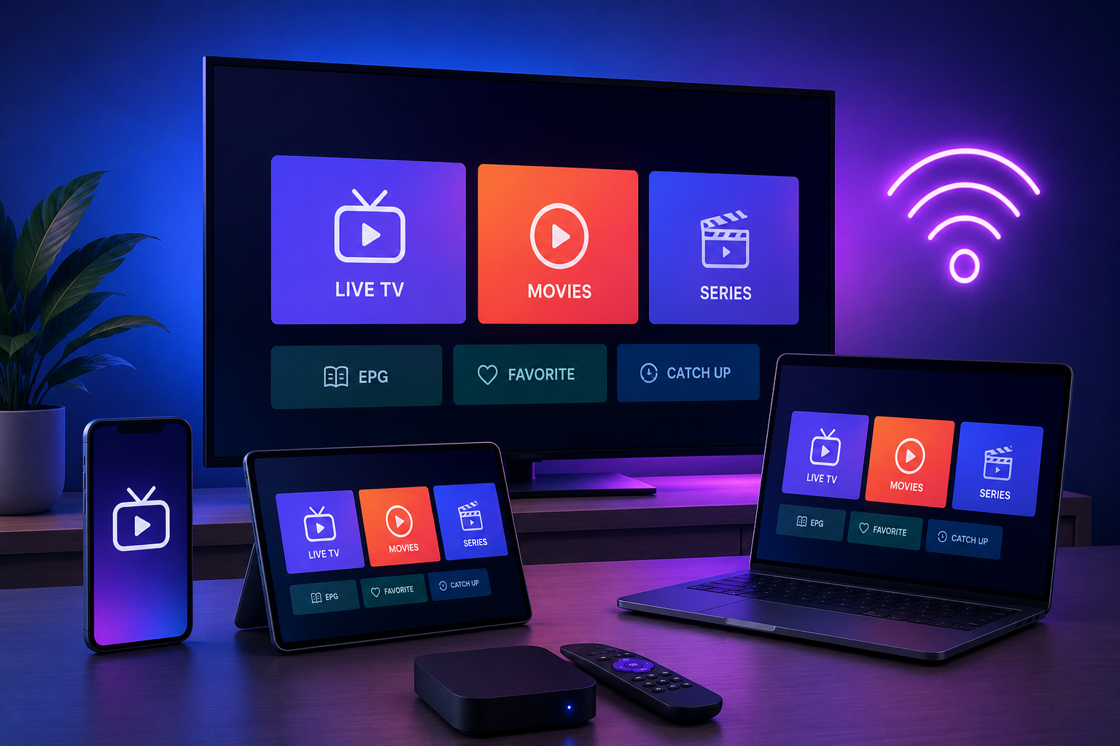
Getting started with an IPTV provider does not require technical expertise beyond installing an app and entering a URL or activation code. The hard part is picking the right provider in the first place. Spend at least an hour reading ip-tv provider reviews reddit and dedicated forum threads before committing.
Frequently Asked Questions
Is IPTV legal in the UK and US?
The technology itself is legal — many major telecom providers use